Dallas Intelligence
Why Old Preston Hollow Doesn't Follow the Rules of Real Estate
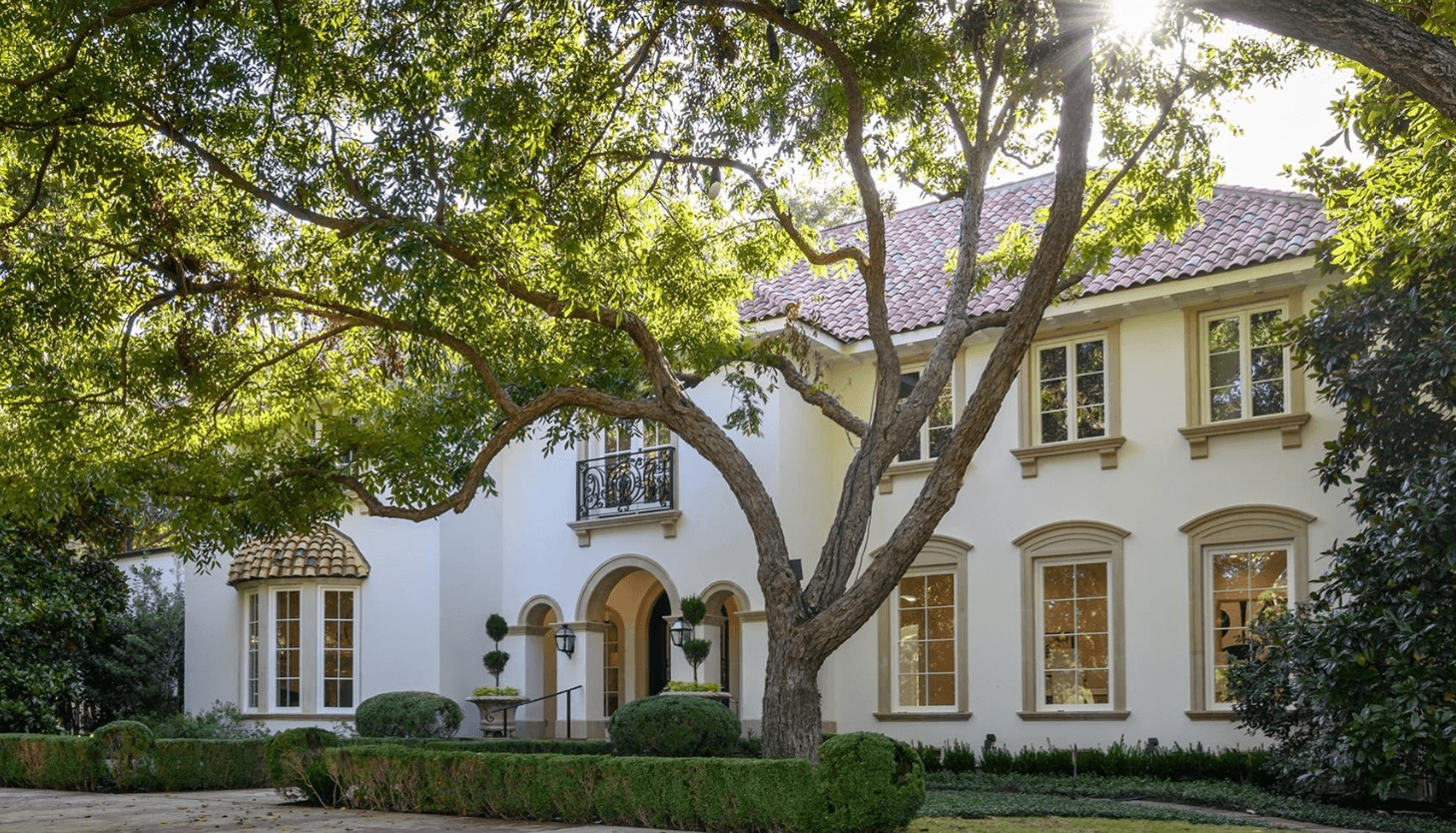
When the Property Matters More Than the Market
Real estate advice tends to rely on averages.
Average price. Average days on market. Months of inventory. Price per square foot. Spring selling season. Buyer's market. Seller's market. All useful. And occasionally beside the point.
Old Preston Hollow is one of the places in Dallas where the individual property can matter more than the neighborhood statistic.
Start with the problem of comparables
In a neighborhood of relatively similar houses and lots, recent sales can provide a reasonably clear framework for value.
Old Preston Hollow makes that harder.
One property may have substantial acreage. Another has a smaller but beautifully proportioned lot on an exceptional street. One house may be architecturally significant. Another may derive most of its value from the land beneath it. Privacy, setbacks, trees, topography, renovation quality, and the relationship between the house and the site can vary enormously.
Put those properties into the same spreadsheet, and the numbers may look precise.
That doesn't necessarily make the comparison meaningful.
Scarcity changes buyer behavior
This is where Old Preston Hollow begins behaving differently.
A buyer looking for a conventional four-bedroom house in a large neighborhood may reasonably assume another suitable option will appear.
A buyer looking for a very particular Old Preston Hollow property can't always make that assumption.
Maybe the priority is acreage. Maybe it's a certain street. Maybe the buyer wants an architecturally significant older home rather than new construction. Maybe privacy is non-negotiable.
Or perhaps the requirement is simply a combination of land, location, and house that rarely comes together.
Old Preston Hollow is a particularly good example of a broader Dallas luxury-market distinction: expensive isn't necessarily the same as exceptional.
When the list becomes that specific, timing the market becomes less useful. The question shifts from Is now the perfect time to buy? to How likely am I to see this combination again?
Those are very different decisions.
A buyer's market can exist around an exceptional property
This is one of the most important distinctions in luxury real estate.
Broader Preston Hollow can have rising inventory, longer marketing times, and greater negotiating room while a particularly scarce Old Preston Hollow property attracts immediate interest.
Both things can be true.
“Buyer's market” describes the balance of supply and demand across a defined market. It doesn't mean every seller has lost leverage.
Likewise, a strong market doesn't guarantee that an over-improved house, compromised lot, or ambitious asking price will be embraced simply because the address is good.
That's why broader conditions such as a market that currently favors Preston Hollow buyers still need to be interpreted property by property.
The property still has to make sense.
Price per square foot becomes particularly blunt
Buyers naturally want benchmarks, and price per square foot can be useful when comparing similar properties.
Old Preston Hollow frequently gives you properties that aren't very similar.
How much of the value belongs to the house?
How much belongs to the land?
What is the value of a mature landscape that took decades to establish?
Does the architecture add value, or will the next buyer see the structure as an obstacle?
Would replacing the house improve the property or destroy the thing that made it interesting?
Those questions don't fit neatly into a price-per-square-foot calculation.
Some of that behavior becomes easier to understand once you know how Old Preston Hollow developed in the first place.
Sellers have the same problem in reverse
An unusual property can be difficult to price because there may be no perfect comparable.
Price it entirely from neighborhood averages, and you may miss what makes it valuable.
Price it entirely from emotion or replacement cost, and the market may disagree.
The work is in understanding where the property sits within its very small competitive set, what today's buyers will recognize as meaningful, and what requires explanation.
That last part matters.
An exceptional property shouldn't need hyperbole. It needs context.
Why is this lot unusual? Why does this street matter? What did the architect do particularly well? What could be recreated elsewhere, and what couldn't?
Sometimes the market really is one house wide
That's the simplest way I know to explain Old Preston Hollow.
There is a broader market here. Interest rates matter. Inventory matters. Buyer confidence matters. Economic conditions matter.
But at the upper end, there are moments when none of those tells you as much as the property directly in front of you.
Because sometimes there isn't another one around the corner.
And that's when Old Preston Hollow stops behaving like an average and starts behaving like itself.
Written and curated by Shay Lary
Global Real Estate Advisor, Christie’s International Real Estate | Lone Star