Dallas Intelligence
Preston Hollow Favors Buyers—But Not Everywhere
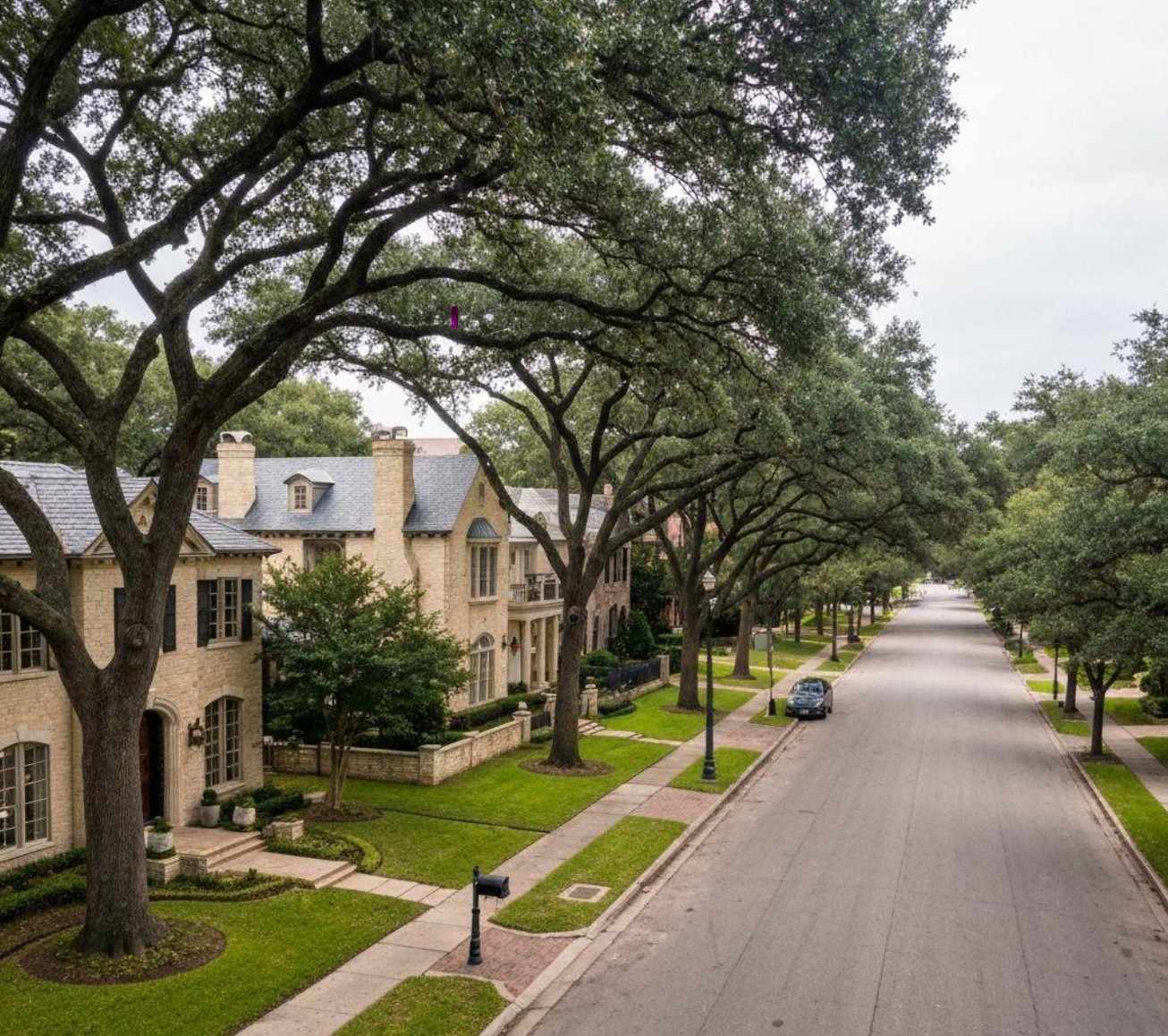
More time has shifted some leverage toward buyers. The interesting part is where it hasn't.
Preston Hollow buyers have something particularly valuable right now: time.
Through the first eight months of 2026, 118 single-family homes closed across the area included in this analysis. That's almost identical to the 116 sales recorded during the same period last year.
What's changed considerably is how long those transactions are taking.
The median home sold after 41 cumulative days on market from January through August 2026, compared with just 26 days during the same period in 2025.
And yet, the other numbers don't look much like a market in retreat.
The median sale price increased from approximately $2.49 million to $2.75 million. Median price per square foot moved more modestly, from $534 to $541. And sellers ultimately received almost exactly the same percentage of their final asking price: 96.8% in 2025 compared with 96.7% this year.
That doesn't mean Preston Hollow values broadly increased by 10%. The neighborhood contains too wide a range of properties for the change in median sale price to be treated as appreciation, and the relatively small movement in price per square foot suggests the mix of homes sold matters here.
But taken together, the numbers do tell us something interesting.
Buyers haven't stopped buying Preston Hollow. They're taking longer to decide what deserves the price.
And that doesn't necessarily give them equal leverage everywhere.
More time changes the conversation
When buyers don't have to make an immediate decision, they become more selective.
That's particularly noticeable in a neighborhood where houses vary so much. Buyers can compare new construction against renovated older homes, larger lots against newer finishes, and one pocket of Preston Hollow against another.
They also have more opportunity to notice compromises.
An awkward floor plan matters more when there are alternatives. So does deferred maintenance, an inferior lot, dated construction, or a price that assumes every renovation dollar should be returned to the seller.
The year-over-year numbers reinforce that distinction.
Homes are taking substantially longer to sell, but the median sale-to-list ratio has barely moved.
In other words, more time hasn't automatically translated into dramatically lower prices.
It's giving buyers more opportunity to decide which properties are worth pursuing—and which aren't.
New construction has its own competitive set
Preston Hollow has seen substantial new construction, and those homes tend to be easier to compare with one another.
Buyers can evaluate square footage, finish level, floor plans, lot size, builder reputation, outdoor space, and price across several available properties. When comparable new homes are competing for the same buyer, pricing becomes more transparent.
That's where a more deliberate market can create meaningful negotiating leverage.
But even here, the lot matters.
A new house on a compromised site isn't necessarily interchangeable with another new house on a better street, with stronger trees, greater privacy, or a more generous backyard.
Preston Hollow has a way of turning what looks comparable on paper into a much more complicated decision in person.
Older homes require a different calculation
This is where the market gets interesting.
An older Preston Hollow house may need updating and still occupy the better piece of land.
Another may have been renovated beautifully but carry systems or structural issues that aren't obvious in photographs.
And then there are houses caught somewhere in between: not original enough to appeal to a preservation-minded buyer, not renovated enough to feel turnkey, and not priced like a property someone expects to substantially change.
A market that gives buyers more time tends to expose those distinctions.
Buyers can ask a better question than Do I like this house?
They can ask:
Is this the right property?
Old Preston Hollow doesn't always cooperate
The broad market becomes less predictive as the property becomes harder to replace.
A particular street, unusual acreage, mature landscape, significant architecture, exceptional privacy, or some combination of those things can shrink the competitive set dramatically.
A buyer may have negotiating leverage across Preston Hollow and very little leverage over the one property that checks a set of boxes rarely found together.
That's why any discussion of a buyer-favorable market needs some qualification here.
Buyer leverage exists at the market level. Scarcity still exists at the property level.
Both can be true at the same time.
Expensive Isn't the Same as Exceptional
What this means for buyers
This is a good market in which to be patient, but not indiscriminate.
More time gives buyers the opportunity to understand Preston Hollow before committing to a property. Drive different pockets. Compare lot sizes. Look at older homes as well as new construction. Pay attention to what has been sitting and, more importantly, ask why.
Preston Hollow Isn't One Neighborhood
Longer days on market don't automatically mean a house is a bargain.
Sometimes the price is wrong. Sometimes the house has a compromise buyers repeatedly reject. Sometimes a property simply needs the relatively small pool of buyers who will understand it.
And sometimes the characteristics that make a property desirable are precisely the things a buyer won't easily find somewhere else.
Leverage comes from knowing the difference.
And for sellers
The market is less forgiving of a property that isn't positioned correctly.
Presentation matters. Condition matters. Pricing matters.
Most of all, sellers need to understand what the property is actually competing against.
That may be the new construction down the street. It may be another renovated ranch nearby. Or, in the case of an unusual Old Preston Hollow property, the competitive set may be remarkably small.
The strategy shouldn't begin with:
What are homes in Preston Hollow selling for?
It should begin with:
What would a buyer considering this property consider instead?
That's a much more useful question.
And in a market where buyers are taking longer to make decisions, getting that answer right matters even more.
A buyer-favorable market, with an asterisk
The latest numbers make the Preston Hollow market more interesting, not less.
From January through August, closed-sale volume was essentially unchanged from a year ago. Median price per square foot edged higher. Sellers received virtually the same percentage of their final asking price.
But median cumulative days on market increased from 26 days to 41.
The market is taking longer to make decisions.
That gives buyers more room to compare, question, negotiate, and walk away when a property doesn't justify its price.
But none of those things flattens Preston Hollow into one market.
The more distinctive the property becomes, the less useful the broad statistics can be.
So yes, Preston Hollow currently gives buyers some leverage.
Just don't assume every house got the memo.
Data Note
Dallas Curated analysis of NTREIS single-family residential sales within the defined Dallas Curated Preston Hollow market area. Comparison periods are January 1–August 31, 2025, and January 1–August 31, 2026. Median statistics can be influenced by the mix of properties sold and should not be interpreted as appreciation or depreciation of an individual property.
Written and curated by Shay Lary
Global Real Estate Advisor, Christie’s International Real Estate | Lone Star