Experience Dallas
Why the Bird Streets Are Being Rebuilt One Lot at a Time
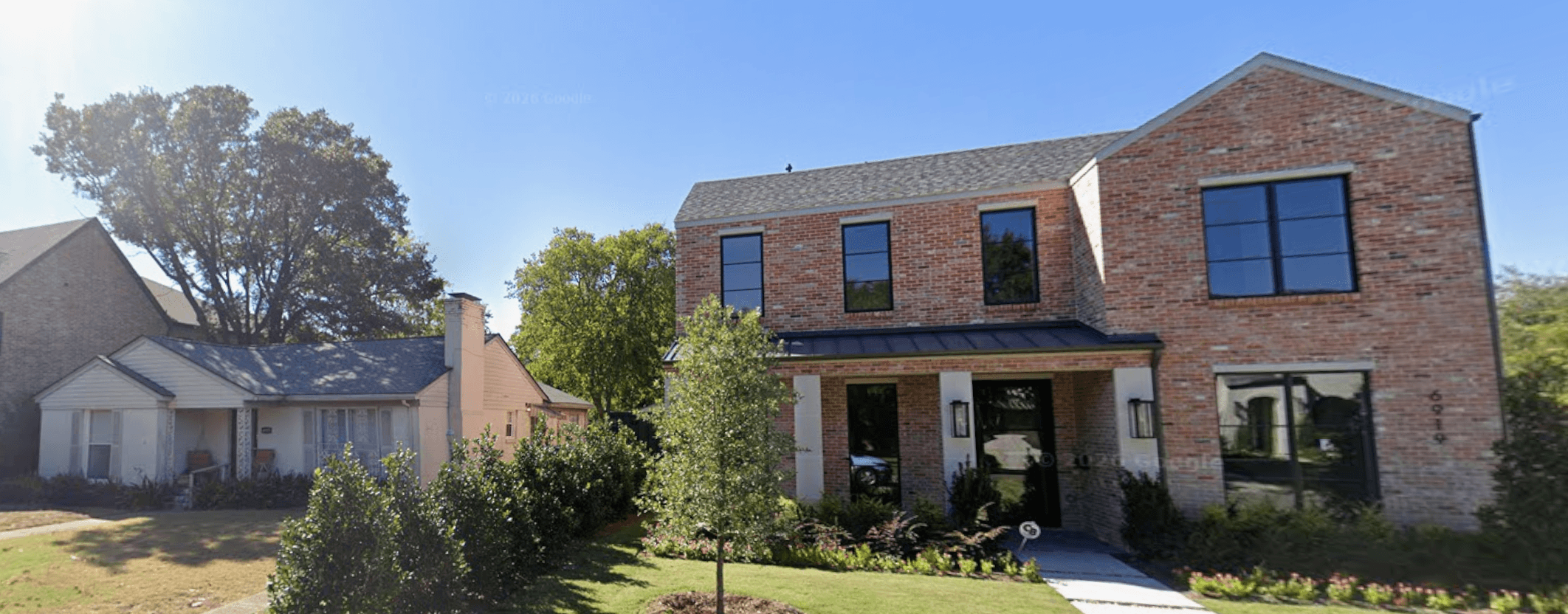
Drive through the Bird Streets today, and one thing becomes obvious pretty quickly: this is a neighborhood being rebuilt house by house.
An original 1940s cottage might sit next to a recently completed custom home, with another property under construction a few doors down. There was no master developer and no single moment when the neighborhood changed. Instead, reinvestment has happened one lot at a time, which is part of what makes the Bird Streets interesting right now.
The neighborhood itself isn't new. The houses increasingly are.
The original houses were modest
Much of the original housing in the Bird Streets dates to the 1940s and postwar years: smaller cottages and ranch-style homes on lots that, today, sit in a very different real estate market.
Some of those houses have been thoughtfully renovated. Others have been expanded over the years. And many have given way to substantially larger new homes.
You can see just how much that has changed the housing profile in the numbers. Among single-family homes sold during the first half of 2026, the median year built was 2020. That's remarkable for a neighborhood where you can still drive past houses that have been standing for roughly 80 years.
If you're curious about what was here before the current wave of construction, The Bird Streets Before They Were the Bird Streets tells that part of the story.
So why is so much being rebuilt here?
Location explains a lot of it.
The Bird Streets sits in a particularly useful pocket of Dallas. Inwood Village and West Lovers Lane are close by. So are Dallas Love Field and the Medical District. The Park Cities are just to the east, while Uptown and Downtown are easy to reach without actually living in either.
Then there is the Dallas North Tollway, which makes heading north relatively straightforward.
Put all of that around an established residential neighborhood with older housing stock, and the redevelopment starts to make sense. Buyers who want a newer home don't necessarily have to give up a close-in location to get one.
That's a combination builders noticed years ago, and today the amount of new construction is impossible to miss.
But “new construction” doesn't tell you very much
This is where I would slow down as a buyer.
Two new homes in the Bird Streets can look fairly comparable online and feel completely different once you're standing in them. Lot width matters. So does where the house sits on the lot, how much usable outdoor space remains, where the neighboring homes are positioned, and whether the floor plan actually works for the way you live.
I'd pay attention to drainage, privacy, garage configuration, tree canopy, and the relationship between the size of the house and the size of the lot. I'd also look carefully at the rest of the block.
That last part matters here because the Bird Streets is still changing. The original cottage next door may stay exactly as it is for another 20 years—or it may be the next property to be rebuilt.
That doesn't make one scenario good and the other bad. It simply means you're buying into a neighborhood that is still evolving, and I think it's worth understanding that before you buy the house.
The older homes still have a place here
I wouldn't assume every original house is simply waiting to be torn down.
There are older homes in the Bird Streets with charm, good proportions, mature landscaping, and renovations that make a compelling case for keeping what was already there. A thoughtfully updated 1940s house can feel very different from a new 4,500-square-foot home, even when they're sitting on the same street.
For some buyers, that's exactly the appeal.
It also means the Bird Streets isn't really one housing market. Depending on the property, you may be looking at an original home to live in, a renovation opportunity, a lot whose underlying land value is a major part of the equation, or a finished luxury home.
Those aren't interchangeable purchases, even when the addresses are only a few doors apart.
The block matters almost as much as the house
This is probably the biggest thing I'd want a buyer to understand about the Bird Streets.
Don't fall in love with the neighborhood name and stop there.
Drive the individual block. Look at what's been rebuilt and what hasn't. Notice the scale of the houses around the property. Pay attention to traffic, airport proximity, trees, sidewalks, and how the home actually sits among its neighbors.
And if you're also looking at nearby Briarwood—which many buyers do—the comparison is worth making. The two neighborhoods share quite a bit geographically, but they don't always feel the same once you're in them. I've broken that down more fully in Bird Streets vs. Briarwood.
The Bird Streets isn't a new Dallas neighborhood. It's an established one being rewritten in real time, one property at a time.
And right now, that's really the story.
Written and curated by Shay Lary
Global Real Estate Advisor, Christie’s International Real Estate | Lone Star