Experience Dallas
Oak Lawn Isn't One Neighborhood
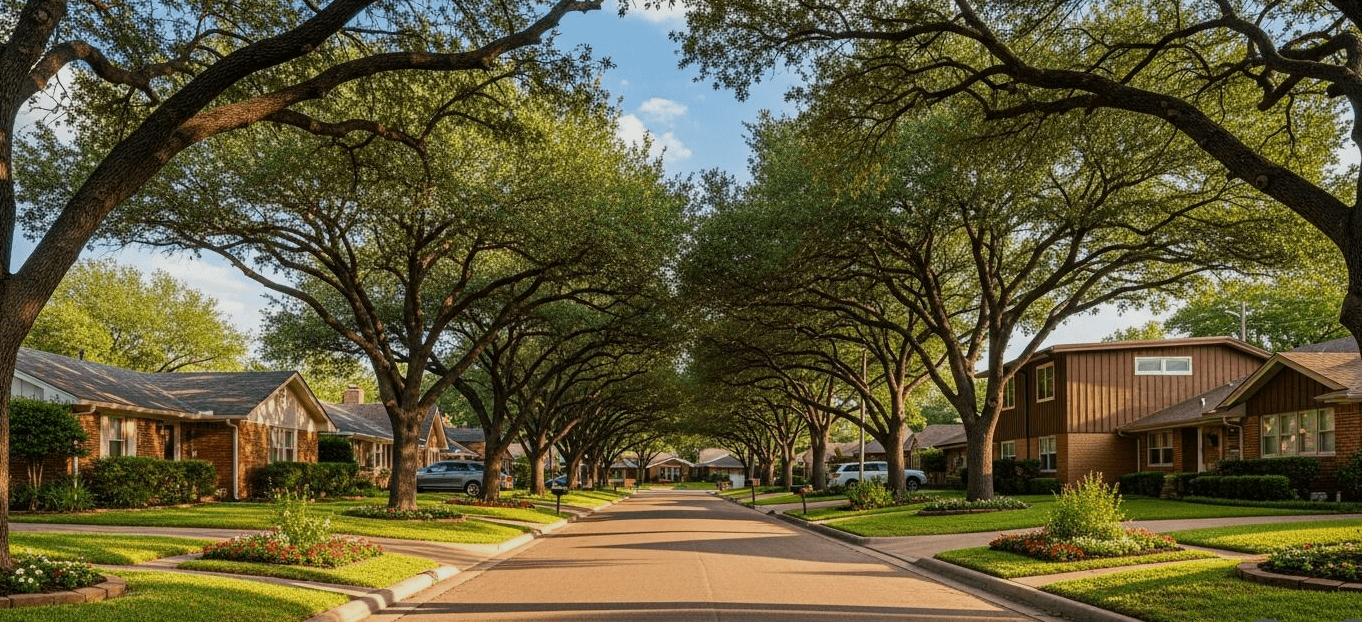
Ask someone in Dallas where Oak Lawn begins and ends, and there's a decent chance you'll get a vague hand gesture.
That's actually part of understanding the neighborhood.
Oak Lawn is less a neatly contained residential enclave than a collection of places that grew together over time. Turtle Creek feels different from Cedar Springs. Perry Heights feels different from both. Turn down one residential street and you're passing 1920s cottages beneath mature trees; a few blocks later, you're looking up at a condominium tower.
That range isn't incidental to Oak Lawn. It is Oak Lawn.
Start With Turtle Creek
Along Turtle Creek Boulevard, Oak Lawn becomes vertical.
The creek, landscaped parkway, mature trees, and concentration of residential towers create one of Dallas' most recognizable high-rise corridors. Some buildings date to the midcentury era, while others represent much newer versions of luxury condominium living.
It's urban, but it doesn't feel particularly hard-edged. The landscape softens it.
And that matters. Turtle Creek offers something Dallas doesn't have in many places: high-rise living with a genuine green-space identity.
Then There Is Cedar Springs
Move toward Cedar Springs Road and the personality changes again.
This is Oak Lawn at its most public. Restaurants, bars, neighborhood businesses, patios, and nightlife line the corridor, but describing Cedar Springs simply as an entertainment district misses the larger story.
For decades, it has been the center of Dallas' LGBTQ+ community and one of the city's most important places for gathering, organizing, celebrating, and simply being visible.
That history isn't separate from Oak Lawn's identity. It helped create it.
And Somehow, Perry Heights Is Here Too
Then you turn off Cedar Springs or Lemmon and find Perry Heights.
The nine-block residential pocket dates to the 1920s, with older homes, established landscaping, front porches, and a scale that feels surprisingly removed from the commercial streets surrounding it.
This may be Oak Lawn's best trick.
Dallas is full of neighborhoods where the housing stock changes gradually. In Oak Lawn, it can change almost instantly.
The Housing Market Reflects the Geography
That variation creates an unusually broad real estate market.
Oak Lawn includes smaller condominiums in older buildings, contemporary townhomes, duplexes, historic single-family homes, mid-rise residences, and some of Dallas' better-known luxury towers.
So a single neighborhood-wide median can only tell you so much.
Two buyers can both say they're looking in Oak Lawn and mean completely different things.
One may want a lock-and-leave condominium overlooking Turtle Creek. Another wants a townhome with a private garage near restaurants. Someone else may be searching specifically for one of the relatively scarce detached homes tucked into an older residential street.
They're technically looking in the same neighborhood. Practically, they're shopping different markets.
That's the Point
Oak Lawn doesn't offer one prescribed version of Dallas life.
It can be polished and residential, loud and social, historic, vertical, walkable, green, or decidedly urban depending on where you are.
In a city where many neighborhoods are defined by consistency, Oak Lawn is defined by the opposite.
Its pieces don't quite match.
Somehow, that's exactly why it works.
Written and curated by Shay Lary
Global Real Estate Advisor, Christie’s International Real Estate | Lone Star